


In the manufacturing sector, operational efficiency is paramount. From the production line to the overall manufacturing process, performance data offers invaluable insights that can drive business growth and uphold quality standards.
The most effective method to gather and interpret this data is by establishing Key Performance Indicators (KPIs). These KPIs enable measurement across various facets of your operations, facilitating data-driven reporting and informed decision-making.
Below are 25 exemplary manufacturing KPIs to inform and enhance your data management strategy.
What Does KPI stand for in manufacturing?
KPI stands for Key Performance Indicator. In manufacturing, KPIs are defined, quantifiable measures that provide insights into performance. Manufacturing companies utilise KPIs to monitor and assess various aspects of their operations, using these insights to refine processes and boost operational efficiency.
Manufacturing KPIs can monitor elements such as production efficiency, quality control, and cost management. They also offer valuable insights for other departments, including marketing and human resources, by highlighting areas for improvement and optimisation.
Using Key Performance Indicators to Improve Your Business
KPIs assist manufacturing businesses in measuring performance against set objectives and goals. Effective KPIs can inform decisions related to labour, suppliers, and raw material costs, ensuring optimal outcomes for the business.
By enhancing the production process and overall manufacturing operations, KPIs provide clear and informative metrics. While not all KPIs are universally applicable, tailoring them to suit your specific business needs ensures the most relevant data is captured and analysed.

25 Manufacturing KPI examples to use in 2026
KPIs to enhance the production process
-
Overall Equipment Effectiveness (OEE)
OEE is a critical metric for assessing production efficiency. It evaluates equipment effectiveness during scheduled production time by measuring Availability × Performance × Quality. OEE helps identify anomalies, enabling swift maintenance actions to minimise production disruptions. -
Machine Downtime
This metric encompasses both scheduled and unscheduled downtime, including maintenance, machine changeovers, and setup times. Monitoring machine downtime provides an overview of operational performance and highlights areas for improvement. -
Unscheduled Downtime
Unplanned stoppages can significantly impact production schedules. Implementing preventive and scheduled maintenance strategies can reduce unscheduled downtime, maintaining higher performance levels and ensuring smooth operations. -
Cycle Time
Cycle Time measures the total duration from the start of the manufacturing process to the delivery of the final product. It's a vital metric for assessing production efficiency and identifying potential bottlenecks. -
Machine Set-Up Time
Understanding the time required to set up machinery is crucial for minimising lost production time. Analysing setup times can help implement processes that reduce disruptions and enhance overall efficiency. -
Production Volume
This KPI tracks the quantity of products manufactured within a specific timeframe. It aids in identifying high-performing machines and production lines, facilitating contingency planning during breakdowns or peak periods. -
Overall Operations Effectiveness (OOE)
OOE evaluates the effectiveness of the production process over time, calculated by measuring Performance × Quality × Availability (Operation or Actual Production Time). -
Percentage Planned Maintenance
This metric compares scheduled maintenance to unscheduled maintenance, indicating the effectiveness of preventive strategies in reducing unexpected downtime. -
Customer Return Rate
A high rate of customer returns due to defective products can signal quality issues within the manufacturing process. Monitoring this KPI helps identify areas needing improvement to enhance customer satisfaction.
KPIs to enhance the manufacturing process
-
First Pass Yield (FPY)
FPY measures the percentage of products manufactured correctly on the first attempt without rework. Higher FPY rates indicate efficient manufacturing processes and skilled workmanship. -
Throughput
Throughput assesses the production capacity of a machine, line, or entire operation over a defined period, typically expressed as units produced per hour, day, or week. -
Rework
Tracking the number of units requiring rework due to quality issues helps identify inefficiencies and areas where additional training or process improvements are needed. -
Cost Per Unit
This KPI calculates the total cost of manufacturing a product, including production, materials, labour, and overheads. It's essential for pricing strategies and profit margin analysis. -
Inventory Turnover Ratio
This ratio measures how often inventory is sold and replaced over a period, indicating the efficiency of inventory management and supply chain operations. -
Supplier On-Time-In-Full (OTIF)
OTIF evaluates supplier performance by measuring the percentage of orders delivered on time and in full. Consistently low OTIF rates may necessitate supplier reviews or changes.
KPIs to boost production line performance
-
Capacity Utilisation
This metric assesses the extent to which production capacity is being used, calculated by dividing actual output by potential output. High capacity utilisation indicates efficient resource use. -
On-Time Delivery
This KPI tracks the percentage of products delivered to customers on schedule. Achieving a high on-time delivery rate is crucial for customer satisfaction and operational efficiency. -
Production Schedule Attainment
This measures the ability to meet planned production targets, calculated as (Actual Output ÷ Planned Output) × 100. It helps identify scheduling and performance issues. -
On-Standard Operating Efficiency
This KPI compares actual employee performance to established labour standards, highlighting areas for improvement and informing incentive programmes. -
Training Hours
Tracking the number of training hours per employee helps assess the effectiveness of training programmes and their impact on productivity and quality. -
Employee Turnover
High employee turnover can disrupt production and increase training costs. Monitoring turnover rates helps identify underlying issues affecting staff retention. -
Reported Health and Safety Incidents
This KPI tracks workplace incidents, aiming for zero occurrences. High incident rates necessitate reviews of safety protocols and training. -
Revenue Per Employee
This metric calculates the average revenue generated per employee, providing insights into workforce productivity and operational efficiency. -
Profit Per Employee
Similar to revenue per employee, this KPI assesses the average profit generated per employee, informing decisions on staffing and resource allocation. -
Absenteeism Rate
Monitoring absenteeism rates helps identify patterns that may affect production and indicates areas where employee engagement or health initiatives may be needed.
Capturing your manufacturing KPIs
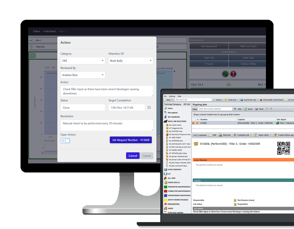
Effectively capturing and analysing manufacturing KPIs is essential for improving operational efficiency and identifying business trends. Utilising a manufacturing KPI dashboard offers real-time and detailed insights, facilitating informed decision-making and reporting.
Advanced analytics engines, such as those found in solutions like MaintMaster, provide customisable dashboards tailored to specific departments or requirements. These dashboards present data in various formats—graphs, charts, or Pareto analyses—allowing management and production teams to assess productivity across different parameters, including line, product, shift, or time period.
By selecting and monitoring the KPIs most relevant to your business objectives, you can capture actionable data insights, driving continuous improvement in your manufacturing processes.