



Low data confidence, poor decision-makingFor manufacturers striving to reduce costs, increase capacity, and deliver operational excellence, accurate and timely data is vital. Yet many still rely on outdated, manual OEE tracking methods, spreadsheets, paper logs, and fragmented systems, that limit visibility and delay action.
Maintmaster OEE offers a smarter, real-time alternative. In this article, we’ll explain why switching to automated OEE software isn’t just a smart upgrade it’s a business-critical move.
5 reasons on why manual OEE tracking falls short
Spreadsheets may be convenient for small tasks, but when it comes to managing the performance of an entire production line, they're not just inefficient—they’re risky.
1. Labour-intensive and costly
Manually collecting OEE data requires operators to log information on paper, then re-enter it into spreadsheets. This process is slow, error-prone, and time-consuming. Valuable production hours are lost to tasks that automated systems can handle instantly.
2. Time-lagged and reactive
Manual data is always historical. By the time it's analysed, the moment to act has passed. Real-time OEE software enables teams to respond proactively—predicting and preventing losses before they impact performance.
3. Inaccuracy and risk
Operators often estimate downtime or select default root causes just to fill in blank fields. Transcription errors are inevitable. Managers relying on this flawed data end up driving decisions based on guesswork, not facts.
4. Data that doesn’t drive action
Even if data is collected accurately, spreadsheets can only show basic trends—what’s happening, not why. Without intelligent analysis and root cause visibility, topline OEE figures don’t translate into actionable improvements.
5. Lack of visualisation
Large volumes of numeric data are difficult to digest. Automated OEE software turns complex datasets into real-time dashboards, graphs, and performance snapshots that engage teams at every level.
The Power of Automated OEE Software
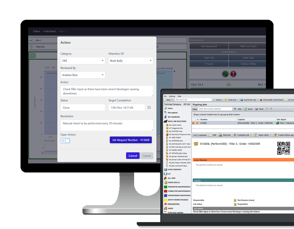
Maintmaster OEE was developed to address these exact challenges. As a Smart Factory software solution, it eliminates the pain points of manual data collection and provides manufacturers with the tools they need to monitor, understand, and improve performance—in real time.
Real-time, accurate, trusted Data
Automated systems pull data directly from machines, reducing human error and increasing trust in the numbers. With operator input layered on top, root causes are captured with clarity and context.
Instant visual dashboards
No more ‘paper mountains’. Configurable dashboards and reports let your teams visualise performance instantly—at shift level, site level, or company-wide.
Meaningful root cause analysis
Smart filtering capabilities allow users to translate technical machine feedback into meaningful business language. For example, a machine might report it’s out of material—but the real cause could be poor stock control. Automated systems help uncover what’s actually going wrong.
Minimal operator disruption
Because data is collected in the background, operators can stay focused on production. When their input is needed, such as confirming downtime reasons—it’s quick, guided, and value-adding.
| Manual Data Collection Pitfalls |
Automated OEE Software Benefits |
| Time-lagged information | Real-time data collection and insight |
| Inaccurate root causes and downtime estimates | Accurate root cause identification and filtering |
| Requires manual transcription | Seamless data capture with minimal intervention |
| Low data confidence, poor decision-making | Trusted data that supports confident action |
| Operator distraction from high-value tasks | Operator involvement only when meaningful |
6 Compelling reasons to switch
Whether you’re working with paper logs or spreadsheets, here are six reasons to replace them with automated OEE software:
1. Save time and labour costs
Automating data collection frees up hours each week across teams—from operators to analysts—saving both time and payroll.
2. Take better and faster decisions
With instant access to accurate data and visual dashboards, review meetings become focused, productive, and impactful.
3. Predict and prevent Losses
Continuous monitoring detects patterns and trends—allowing teams to address issues before they become major problems.
4. Improve OEE with more than just a score
Manual systems give you a topline OEE score—automated systems help you understand what’s driving that score, and how to improve it.
5. Maximise ROI
Automated systems begin generating ROI within weeks by increasing throughput, reducing waste, and eliminating unnecessary investments.
6. Gain a scalable, future-proof solution
Maintmaster OEE integrates with CMMS, ERP, MES and SCADA systems—enabling smart factory transformation without starting from scratch.
Making the switch
In the past, automation may have seemed futuristic, expensive, or technically complex. Today, it’s standard in most machines and lines. What’s missing in many factories is the system to bring that data together into a single source of truth.
Maintmaster OEE bridges this gap, giving teams access to filtered, real-time data they can trust, and act on.
Continuing with spreadsheets and manual data collection creates delays, risks, and missed opportunities. If you're serious about continuous improvement, now is the time to switch to automated OEE software.