



In manufacturing, every minute of downtime matters. Changeover time, the dead period between completing one production run and beginning the next—can add up quickly, leading to costly inefficiencies. Even a single hour of changeover per day equates to over 15 days of lost productivity per year.
Despite this, changeover process management remains an underutilised lever for improving operational performance. By understanding and optimising your changeover activities, you can reduce waste, increase flexibility, and significantly enhance your overall equipment effectiveness (OEE).
What is "Changeover Time"?
Changeover time refers to the total time taken to switch from producing one product to another. It begins when the last good item of the previous batch is completed and ends when the first good item of the next batch is produced, meeting quality standards.
Changeover encompasses clean-up, set-up, and start-up processes. If the new product does not meet quality control standards, the changeover is considered incomplete.
Changeover Time vs Setup Time
These terms are often used interchangeably but represent different parts of the process:
-
Setup Time refers specifically to preparing machinery for the next job (e.g., tooling, calibration).
-
Changeover Time includes setup but also covers cleaning, adjustments, verification, and initial production start-up.
Understanding this distinction is vital for identifying opportunities to streamline operations.
Why Reducing Changeover Time matters
- React Faster to customer demand
Faster changeovers allow manufacturers to adapt to changing customer needs and shorter lead times. - Increase production output
Reducing downtime between jobs increases the number of productive hours available each shift, improving throughput.
- Enable smaller batch sizes
Faster changeovers make smaller runs more economical, supporting flexible manufacturing and lean inventory practices.
- Reduce lead times
By minimising non-value-adding time, manufacturers can commit to more competitive delivery schedules and back them up with real-time data.
How to reduce Changeover Time
Step 1: Understand the current process
Start by mapping out your existing changeover activities. Document each step and measure its duration. Capture both internal (must occur when the machine is off) and external (can occur while the machine is running) tasks.
Step 2: Apply SMED principles
The Single-Minute Exchange of Die (SMED) method, pioneered by Shigeo Shingo, involves breaking down changeovers into small elements and converting as many as possible to external tasks. The goal is to complete the changeover in less than 10 minutes.
Step 3: Standardise and optimise
Create standard work instructions for each changeover. Mark settings on equipment, preload materials, and use visual aids to reduce errors. Introduce quick-release mechanisms or modular tooling where applicable.
Step 4: Train and empower teams
Coach operators to spot bottlenecks and take ownership of their roles during changeover. Clear responsibilities and real-time communication can eliminate delays and confusion.
Step 5: Track and improve
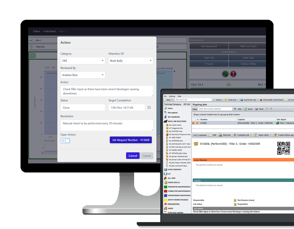
Use Maintmaster OEE to track cycle time, downtime, and variation between changeovers. With accurate performance data, you can spot inefficiencies, benchmark progress, and sustain improvements over time.
A real-qorld example: CooperVision, UK
CooperVision, based in Hamble, Southampton, needed to expand capacity without new equipment. After piloting Maintmaster OEE on one production line, they discovered massive variation in batch change times.
By standardising procedures and coaching teams, they reduced batch change time, achieving a 5% increase in throughput. This led to immediate gains in OEE and better performance on SMED metrics—showcasing the power of accurate monitoring and team alignment.
Work instructions for Changeover procedures
To implement lasting improvements, follow this structured approach:
-
Break down changeovers into elements (cleaning, setup, start-up)
-
Document the current process using observation or video
-
Time each step and record cycle times
-
Identify which elements can be externalised or shortened
-
Repeat the process with adjustments and track improvements
These documented best practices become the foundation for continuous improvement and training.
The benefits of Changeover optimisation
-
Higher production efficiency through reduced downtime
-
Lower operating costs by minimising waste
-
Flexible batch sizing to accommodate customer preferences
-
Faster lead times and better responsiveness
-
More engaged workforce with clear roles and faster feedback
-
Improved OEE through consistent, repeatable processes
Reducing changeover time is one of the most effective and overlooked ways to boost manufacturing performance. With lean tools like SMED and real-time performance monitoring via Maintmaster OEE, manufacturers can make changeovers faster, more predictable, and less costly.
Whether you're producing lenses, auto parts, or electronics, every minute counts. Investing in faster changeovers helps you deliver better value to your customers—at speed, with confidence.