



Equipment failure is a common challenge in many manufacturing businesses and is often the root cause of unplanned downtime. These system failures can significantly impact operations, leading to lost production, missed deadlines, dissatisfied customers, and ultimately, reduced profitability—before even considering the cost of repairs.
Unplanned downtime is estimated to cost businesses up to $50 million annually. So, how can manufacturers effectively minimise downtime and ensure optimal performance throughout operational hours?
In this guide, we’ll explore Mean Time Between Failures (MTBF)—what it is, how to calculate it, and how it helps improve equipment reliability and overall production efficiency.
What is "Mean Time Between Failures"?
Mean Time Between Failures (MTBF) is a key reliability metric used to measure the average time an asset operates before a failure occurs. It provides insights into the dependability of your equipment and serves as a crucial performance indicator in maintenance planning.
MTBF is measured in hours and represents the total operational time of an asset divided by the number of failures during that period. It gives maintenance teams a clearer picture of asset reliability and when preventive maintenance may be required.
How to calculate MTBF
To calculate MTBF, you need accurate data collection. This includes:
-
The total number of hours the asset was functioning without failure.
-
The number of recorded failures during that timeframe.
-
Exclude scheduled maintenance activities, as they may skew the results.
MTBF formula:
Total Uptime (in hours) ÷ Number of Failures = MTBF
Example:
A machine operates for 24 hours but fails twice during that time. If each failure takes two hours to repair, your actual uptime is 20 hours.
20 hours ÷ 2 failures = 10 hours MTBF
This result indicates that, on average, the equipment fails every 10 hours.
Why calculating MTBF matters
Measuring MTBF is critical for understanding how reliable your equipment is. It enables manufacturers to:
-
Anticipate equipment failures
-
Implement proactive maintenance
-
Improve reliability
-
Reduce costly unplanned downtime
A low MTBF suggests frequent failures, while a high MTBF indicates strong equipment reliability and less frequent disruption.
Benefits of MTBF calculation
Reduce unplanned downtime
MTBF data helps your maintenance team anticipate failures and schedule maintenance before breakdowns occur, improving overall equipment uptime.
Improve operational efficiency
Identifying underperforming assets through MTBF calculations enables better decisions on whether to repair, maintain, or replace equipment.
Measure asset reliability
Using MTBF in reliability engineering ensures critical equipment meets performance expectations and supports sustained production.
Informed equipment purchases
MTBF insights guide smarter investment decisions by helping identify high-quality, low-failure-rate equipment.
Plan preventive maintenance
Well-informed maintenance schedules, guided by MTBF, allow you to direct resources effectively and reduce repair costs over time.
MTBF vs MTTF vs MTTR: What’s the difference?
MTBF is often discussed alongside MTTF (Mean Time To Failure) and MTTR (Mean Time To Repair). While they are related, they serve different purposes:
-
MTBF: Average time between failures for equipment that can be repaired.
-
MTTF: Average operational time before an asset fails completely and must be replaced.
-
MTTR: Average time taken to repair a failed asset and return it to full operation.
Together, these metrics help form a comprehensive view of asset performance, informing both long-term planning and daily operations.
Common issues with MTBF data collection
Inconsistencies in failure reporting
Different teams may classify failures differently—some log only critical breakdowns, while others include minor stoppages. This inconsistency can distort your MTBF data.
Incomplete maintenance logs
Accurate MTBF calculations rely on complete repair records. Missing or incomplete data leads to unreliable results and poor decision-making.
How to improve MTBF
Improving MTBF means enhancing the reliability of your equipment through better processes and tools. This can be done by:
-
Regular data collection and consistent reporting practices
-
Conducting root cause analysis to understand failure patterns
-
Scheduling preventive maintenance based on failure trends
-
Replacing underperforming assets with more reliable alternatives
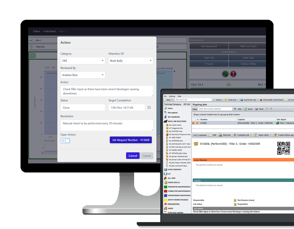
One of the most effective ways to track and improve MTBF is by using software like Maintmaster OEE, which offers real-time visibility into equipment performance and failure trends.
How Maintmaster OEE supports MTBF tracking
Maintmaster OEE goes beyond traditional MTBF tracking by offering continuous performance monitoring, failure alerts, and maintenance logging in real time.
-
Automatically collects machine data
-
Tracks failure frequency and repair times
-
Supports root cause analysis and downtime categorisation
-
Helps plan preventive maintenance tasks with precision
-
Delivers insights into asset utilisation and performance
By centralising your maintenance data, Maintmaster OEE allows you to reduce downtime, extend asset life, and continuously improve your MTBF score.
Understanding and improving Mean Time Between Failures is crucial for any manufacturing operation aiming to optimise efficiency and reduce costs. By calculating MTBF and using the data effectively, your business can better predict equipment failures, allocate resources wisely, and enhance overall operational reliability.
Combining MTBF with tools like Maintmaster OEE enables you to visualise trends, act quickly, and boost the reliability of your production lines—setting the stage for long-term success.