



Time is one of your most valuable resources—and in manufacturing, unplanned production downtime can quickly erode profitability, productivity, and customer trust.
To succeed in a lean manufacturing environment, taking a proactive approach to equipment maintenance is essential. For operations managers, production supervisors, plant controllers, and business owners alike, learning how to minimise downtime is a strategic imperative, not just a maintenance concern.
What is "Production Downtime"?
Production downtime refers to any period during which manufacturing equipment is not producing goods. It represents lost time—whether planned or unplanned—when production halts, and resources are not generating value.
There are two primary types of production downtime:
🟢 Planned downtime
This includes scheduled maintenance, equipment changeovers, cleaning, or shift handovers. Planned downtime is anticipated and accounted for in production schedules. When managed effectively, it supports equipment longevity and operational stability.
🔴 Unplanned downtime
This occurs unexpectedly and disrupts production. Causes include machine breakdowns, power failures, operator errors, or raw material shortages. Unplanned downtime is costly, unpredictable, and often avoidable with the right monitoring systems and preventive strategies in place.
Downtime is a critical metric in lean manufacturing. While some downtime is inevitable, the key to maintaining a high level of operational efficiency lies in minimising unplanned stops and ensuring that every minute on the factory floor is productive.
By understanding and tracking production downtime, manufacturers gain valuable insights into equipment performance, workflow bottlenecks, and overall process health—ultimately enabling smarter decisions and continuous improvement.
The true cost of unplanned downtime
Equipment failure and unexpected downtime are unfortunately common in manufacturing—but their full impact is often underestimated. Beyond the immediate financial losses (which can exceed thousands per minute), unplanned downtime also:
-
Disrupts productivity for the entire shift
-
Increases the risk of equipment or stock damage
-
Impacts other departments, including logistics, customer service, and administration
-
Raises stress levels among operators and managers
-
Damages customer relationships through missed deadlines and longer lead times
Unplanned downtime has both direct and indirect consequences, many of which compound over time. The key to regaining control lies in adopting predictive, data-driven practices.
Common causes of downtime in manufacturing
While downtime can result from various issues—power loss, staff absences, or raw material delays—the leading cause is inadequate equipment monitoring and maintenance.
This is where OEE (Overall Equipment Effectiveness) becomes vital. OEE measures equipment productivity by combining three key metrics:
-
Availability
-
Performance
-
Quality
If any of these fall short, production efficiency suffers. Over time, minor inefficiencies evolve into major breakdowns. Without visibility into these three metrics, teams often remain reactive—only addressing failures after they’ve already impacted output.
From reactive to predictive: The downtime solution
Manual tracking and reactive maintenance are no longer sufficient. To stay competitive, manufacturers need automated systems that provide real-time visibility into performance, productivity, and equipment health.
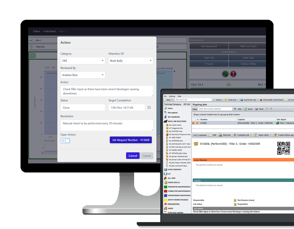
MaintMaster OEE is a powerful tool that supports predictive maintenance and helps eliminate the root causes of downtime. Key features include:
Real-time downtime tracking
Automatically logs every downtime event as it happens. Data is accessible via a simple, intuitive dashboard for full visibility.
Root cause analysis
Identifies underlying causes behind every incident—whether it's operator error, mechanical failure, or external factors—so repeat issues can be prevented.
Automated alerts and reporting
Notifies relevant personnel immediately when thresholds are breached, helping you take action before unplanned stoppages occur.
By adopting these tools, manufacturers shift from a reactive model to a proactive, predictive approach—reducing unplanned downtime and enabling smoother, more efficient operations.
What can downtime tracking do for you?
With advanced downtime tracking powered by Maintmaster OEE, your organisation can:
-
Automate tracking tailored to your specific production environment
-
Schedule maintenance proactively, reducing the likelihood of failure
-
Quantify performance and downtime cost—both direct and indirect
-
Identify root causes quickly, enabling targeted improvement actions
-
Make data-driven decisions on equipment replacement, upgrades, or training
Ultimately, downtime tracking gives you control over your operations—and transforms your maintenance function from a cost centre into a performance driver.
Contextualising downtime: Planned vs Unplanned
It’s unrealistic to expect perfect uptime. Even in highly efficient environments, some planned downtime will occur—changeovers, cleaning, operator breaks, etc. These are acceptable and even necessary.
However, the goal is to eliminate unplanned downtime, which typically arises from poor maintenance or lack of foresight.
By documenting and categorising every downtime event, you create a data-rich environment for forecasting, pattern recognition, and workflow optimisation. Over time, this leads to more stable operations and a visual factory where potential issues are identified before they cause disruption.
The real-world benefits of reducing downtime
Reducing downtime isn’t just about saving time—it has a ripple effect throughout your business:
-
Reduced stress and higher job satisfaction for employees
-
Extended equipment life through smarter maintenance
-
Fewer human errors as systems become more stable
-
Energy savings through better process control
-
Higher customer satisfaction through on-time delivery and fewer disruptions
Whether your goal is to become a smart factory or simply improve production stability, reducing downtime is an essential step.
Your first step toward zero downtime
Introducing predictive maintenance supported by real-time analytics won’t make your plant immune to failure—but it will drastically reduce the frequency and severity of unplanned stops.
By using advanced tools like Maintmaster OEE, manufacturers can enhance productivity, increase uptime, and make confident, data-backed decisions.
If you’re ready to take control of your production downtime, get in touch with us today to explore how Maintmaster can support your journey toward operational excellence.