
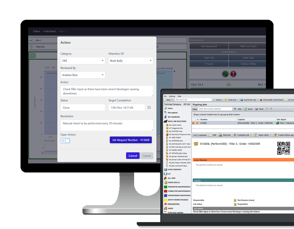



In the competitive world of manufacturing, Manufacturing Monitoring is the cornerstone of operational excellence. The ability to track, measure, and optimise production processes in real-time is critical for reducing downtime, improving quality, and increasing productivity. This is where OEE (Overall Equipment Effectiveness) dashboards, reporting, and Production Monitoring come into play.
By leveraging advanced monitoring tools like Maintmaster OEE, manufacturers can gain real-time insights into their production performance, make informed decisions, and drive continuous improvement.
This guide explores how manufacturing monitoring, OEE dashboards, OEE reporting, and production monitoring work together to to transform manufacturing efficiency and support sustainable growth.
What is manufacturing monitoring?
Manufacturing Monitoring is the process of continuously tracking and analysing production activities, machine performance, and operational efficiency in real-time. It involves collecting data from machines, sensors, and human inputs, which are then processed and displayed using advanced dashboards and reporting tools.
Why is manufacturing monitoring essential?
Manufacturing Monitoring provides several key benefits, including:
-
Real-Time Visibility: Instantly identify issues as they occur, reducing downtime.
-
Data-Driven Decision-Making: Use accurate data to optimise production.
-
Continuous Improvement: Track performance trends and target improvements.
-
Enhanced Productivity: Minimise waste, increase efficiency, and improve quality.
-
Rapid Problem Resolution: Swiftly detect and address performance issues.
How manufacturing monitoring supports OEE
Overall Equipment Effectiveness (OEE) is a critical metric for measuring how efficiently a manufacturing process operates. It is calculated using three primary factors:
-
Availability: Measures downtime and machine uptime.
-
Performance: Assesses how efficiently machines operate compared to their maximum speed.
-
Quality: Tracks the ratio of good products produced versus total output.
By integrating Manufacturing Monitoring with OEE dashboards, manufacturers can visualise and improve these three critical aspects of performance.
Understanding Production Monitoring
Production Monitoring is a critical aspect of Manufacturing Monitoring that focuses on real-time tracking of production activities, ensuring that manufacturing processes operate at peak efficiency. It involves the continuous collection of data from machines, production lines, and operators to provide a complete view of production performance.
Key components of production monitoring
-
Real-Time Data Collection: Continuously capture data on machine performance, production output, and downtime.
-
Visualisation: Display production metrics on digital dashboards for quick understanding.
-
Root Cause Analysis: Identify the reasons behind downtime or performance issues.
-
Automated Alerts: Notify teams of critical issues that require immediate action.
-
Continuous Improvement: Track performance trends and implement corrective actions.
Why is production monitoring important?
Production Monitoring ensures that manufacturers maintain high levels of productivity and quality by providing instant insights into production performance. Key benefits include:
-
Reduced Downtime: Quickly detect and resolve machine issues.
-
Improved Quality Control: Monitor product quality in real-time.
-
Enhanced Team Accountability: Display live performance metrics on the shop floor.
-
Increased Operational Efficiency: Optimise production processes using data-driven insights.
Manufacturing monitoring vs Production monitoring
Production monitoring:
-
Focus: Primarily concerned with tracking the output of a production line or process.
-
Metrics Monitored: Quantity of items produced, production speed, downtime, machine performance, product quality.
-
Scope: Can be applied to any production environment, whether manufacturing, food processing, packaging, or even service-oriented industries.
-
Goal: Ensure that production meets targets, quality standards, and efficiency goals.
Manufacturing monitoring:
-
Focus: A broader approach that covers the entire manufacturing process, from raw materials to finished products.
-
Metrics Monitored: Machine performance, equipment health, energy consumption, maintenance schedules, operator performance, OEE (Overall Equipment Effectiveness).
-
Scope: Specifically focused on manufacturing environments, involving machinery, production lines, and factory operations.
-
Goal: Optimise manufacturing efficiency, reduce costs, improve quality, and ensure safe, compliant operations.
| Aspect | Production Monitoring | Manufacturing Monitoring |
|---|---|---|
| Scope | Specific to production output | Covers the entire manufacturing process |
| Metrics | Output, speed, downtime, quality | OEE, machine performance, maintenance, energy |
| Application | Any industry with a production process | Specifically manufacturing-focused |
| Goal | Meet production targets | Optimise manufacturing efficiency |
OEE dashboards: Real-time production visibility
What are OEE dashboards?
An OEE dashboard is a visual tool that presents real-time production data, providing instant insights into machine performance, production output, and efficiency. Dashboards are an essential part of any Manufacturing Monitoring System, offering clear, actionable data to operators, managers, and executives.
Key features of OEE dashboards
-
Real-Time Data Display: Monitor machine performance, downtime, and quality instantly.
-
Customisable Views: Tailor dashboards to display relevant KPIs for different teams (Production, Maintenance, Management).
-
Visual Representation: Use graphs, charts, and colour-coded indicators to simplify data interpretation.
-
Historical Data Tracking: Review performance trends over time to drive continuous improvement.
-
Multi-Device Access: Accessible on desktop, tablet, or mobile for maximum convenience.
How OEE dashboards enhance production monitoring
-
Instant Problem Detection: Spot performance issues immediately with real-time alerts.
-
Enhanced Team Collaboration: Share live performance data with operators, supervisors, and managers.
-
Accurate Root Cause Analysis: Drill down into downtime reasons and quality defects.
-
Faster Decision-Making: Make informed decisions based on live data rather than assumptions.
-
Increased Operator Accountability: Display dashboards on large screens to keep teams focused on targets.
Advanced OEE reporting for comprehensive Insights
What is OEE reporting?
While dashboards offer instant visibility, OEE reporting provides detailed, analytical insights. It involves compiling performance data over a defined period to identify trends, diagnose issues, and assess the effectiveness of improvement initiatives.
Why OEE reporting is vital for manufacturing monitoring
-
Identify Performance Trends: Track OEE scores over time to understand long-term performance.
-
Pinpoint Root Causes: Analyse downtime, speed losses, and quality defects for targeted improvements.
-
Measure Continuous Improvement: Monitor the impact of improvement initiatives on OEE.
-
Support Compliance and Audits: Maintain accurate records for regulatory compliance.
-
Drive Strategic Decisions: Provide managers with data-backed insights for decision-making.
Components of an effective OEE report
A comprehensive OEE report should include:
-
OEE Scores: Overall and component-level (Availability, Performance, Quality).
-
Downtime Analysis: Detailed breakdown of downtime reasons.
-
Production Counts: Total units produced, good units, and rejected units.
-
Root Cause Analysis: Identification of issues impacting performance.
-
Trend Analysis: Performance changes over time (daily, weekly, monthly).
-
Customised Insights: Specific metrics relevant to your production goals.
How production monitoring, OEE dashboards, and reporting work together
1. Unified data collection
Production Monitoring seamlessly collects real-time data from machines and operators, automatically feeding it into OEE dashboards and generating detailed reports.
2. Real-time visualisation
OEE Dashboards provide instant, easy-to-understand visualisation of data, ensuring operators, supervisors, and managers can monitor performance at a glance.
3. In-depth analysis
OEE Reporting compiles historical data, enabling detailed analysis of performance trends, root causes, and areas for improvement.
4. Continuous improvement
Dashboards and reports provide actionable insights that guide improvement initiatives, allowing teams to focus on problem areas and enhance results.
Best practices for effective manufacturing monitoring
1. Set clear performance goals
Establish specific targets for Availability, Performance, and Quality to align teams on shared objectives.
2. Customise dashboards for different roles
Tailor dashboard views for operators, maintenance teams, and managers, ensuring they access the most relevant data.
3. Regularly review reports
Schedule OEE review meetings to analyse data, track progress, and identify improvement opportunities.
4. Use real-time alerts
Configure automated alerts for critical issues, such as unplanned downtime or high defect rates, for rapid response.
5. Train your teams
Provide training for operators and supervisors to ensure they can effectively use dashboards and reports for better performance.
Predictive insights
Modern Manufacturing Monitoring is evolving beyond real-time data tracking. With advancements in AI and Machine Learning, manufacturers can now use predictive analytics to:
-
Forecast Equipment Failures: Predict when machines will require maintenance.
-
Optimise Production Schedules: Automatically adjust production plans for maximum efficiency.
-
Improve Quality Control: Detect quality issues before they impact production.
-
Enhance Operator Training: Identify skills gaps and tailor training accordingly.
By embracing these advanced capabilities, manufacturers can transition from reactive problem-solving to proactive performance optimisation.
Transform your operations
Manufacturing monitoring, powered by OEE dashboards, reporting, and production monitoring, is a game-changer for manufacturers aiming to achieve higher productivity, better quality, and lower costs.
By providing real-time visibility, data-driven insights, and continuous improvement capabilities, solutions like Maintmaster OEE help manufacturers turn data into action—driving sustainable growth and operational excellence.