


Benchmarking plant performance isn’t just about looking at a single OEE number and declaring a winner. Anyone who’s run a factory floor knows those headline figures rarely tell the full story.
In this guide, we’ll look at how to use OEE benchmarking to make fair comparisons between sites, why context matters and how breaking the metric into its components reveals the real opportunities.
The limits of looking at one OEE score
OEE (Overall Equipment Effectiveness) is a powerful metric for tracking how well your equipment is being used to produce saleable product. It combines Availability, Performance and Quality into a single percentage.
It’s tempting to compare two plants using just this top-line figure. But in practice, that approach can be misleading.
What OEE measurement really tells you
OEE measurement isn’t just about finding out whether a plant is “good” or “bad.” It’s about identifying why performance looks the way it does.
Two factories can both score 60%, but for completely different reasons. One might lose time to long changeovers, while the other suffers from frequent breakdowns. Without looking at the breakdown of the metric, you can miss opportunities or misread the situation entirely.
Why numbers mean different things in each plant
Every plant runs under its own conditions - product mix, customer demand, staffing, shift patterns and even location all differ from plant to plant. These differences shape the numbers in ways that aren’t obvious unless you dig deeper.
A plant making small batches for multiple markets will naturally have more changeovers than one producing a single product at high volume. The first might post a lower Availability score but outperform in terms of speed and yield.
Two plants, same metric, different outcomes
Let’s take a real-world example.
Plant A is a high-volume manufacturer of multiple products for multiple markets. It runs two shifts, five days a week, with small lot sizes and frequent changeovers (planned downtime).
Plant B produces for a single market in very high volumes. Located in a low-cost region, it runs three shifts, 24/7, with long production runs and few changeovers.
On paper, their OEE scores might seem close, but it's whats behind those numbers that tells a different story.
The high-changeover, high-flexibility plant
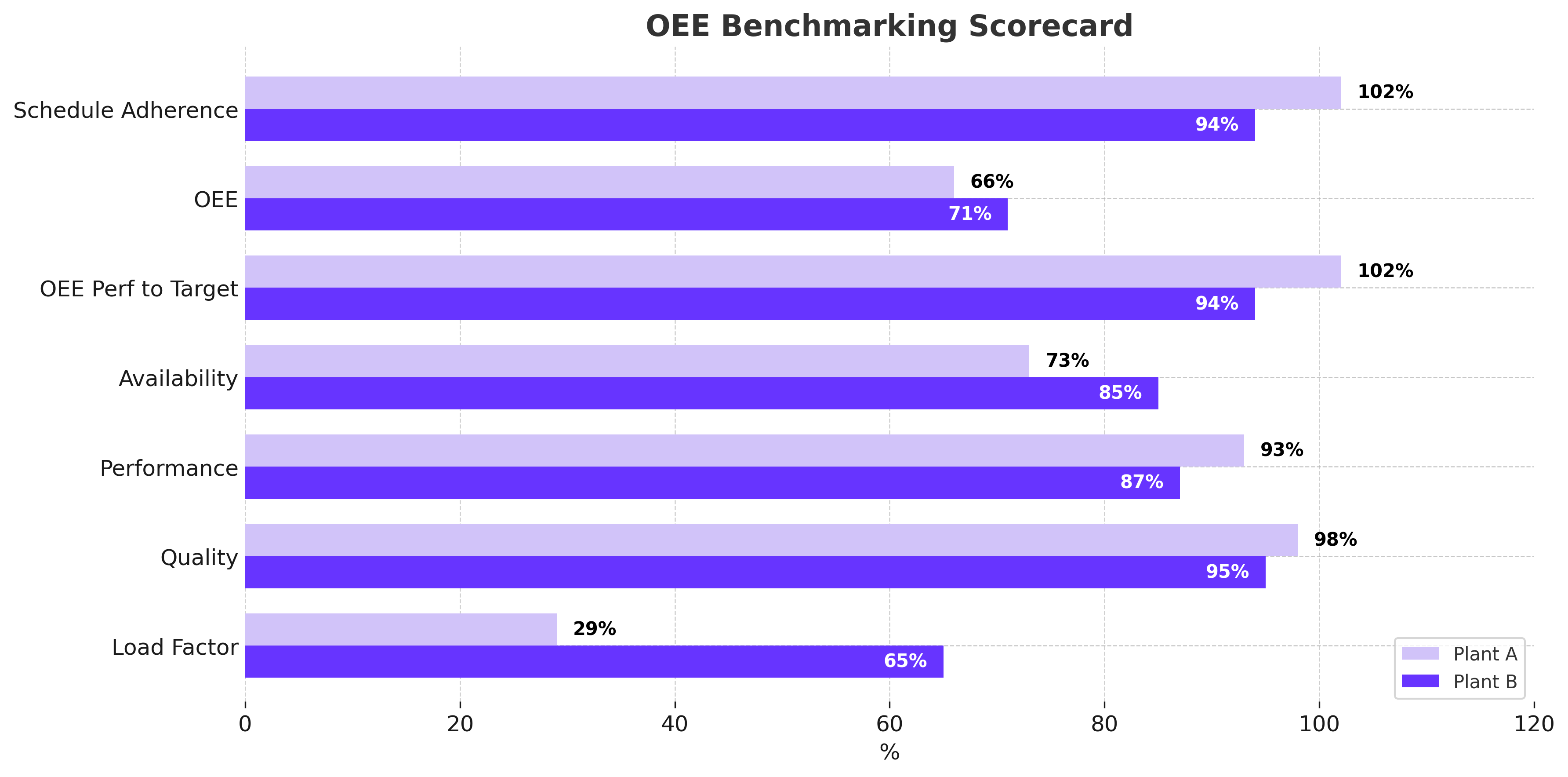
Plant A has an OEE of 66%, slightly lower than Plant B’s 71%. At first glance, you might assume Plant B is more efficient. But Plant A actually exceeds its OEE target, while Plant B misses its own.
The difference comes from Availability. Plant A’s frequent changeovers reduce its available run time, yet its average changeover time is shorter than Plant B’s. Performance and Quality are also better in Plant A.
The high-volume, round-the-clock operation
Plant B benefits from fewer changeovers and higher Availability. But it suffers from slower repair times and more frequent breakdowns. Its Performance and Quality lag behind Plant A’s and despite running at near capacity, it’s less responsive when problems arise.
Digging into the real drivers of OEE
This is where breaking OEE into its components pays off.
How changeovers affect availability
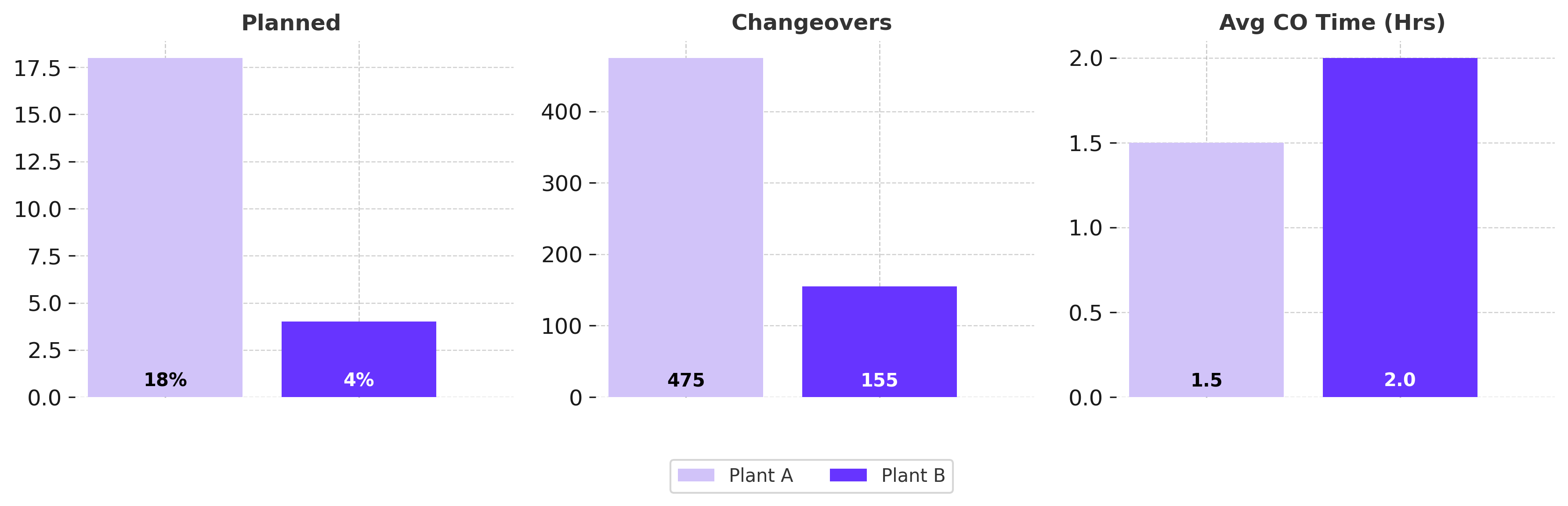
In Plant A, planned downtime from changeovers is four times higher than Plant B. That’s unavoidable when you run a diverse product mix. But because their teams complete changeovers faster, they minimise the impact.
Where performance and quality pull ahead
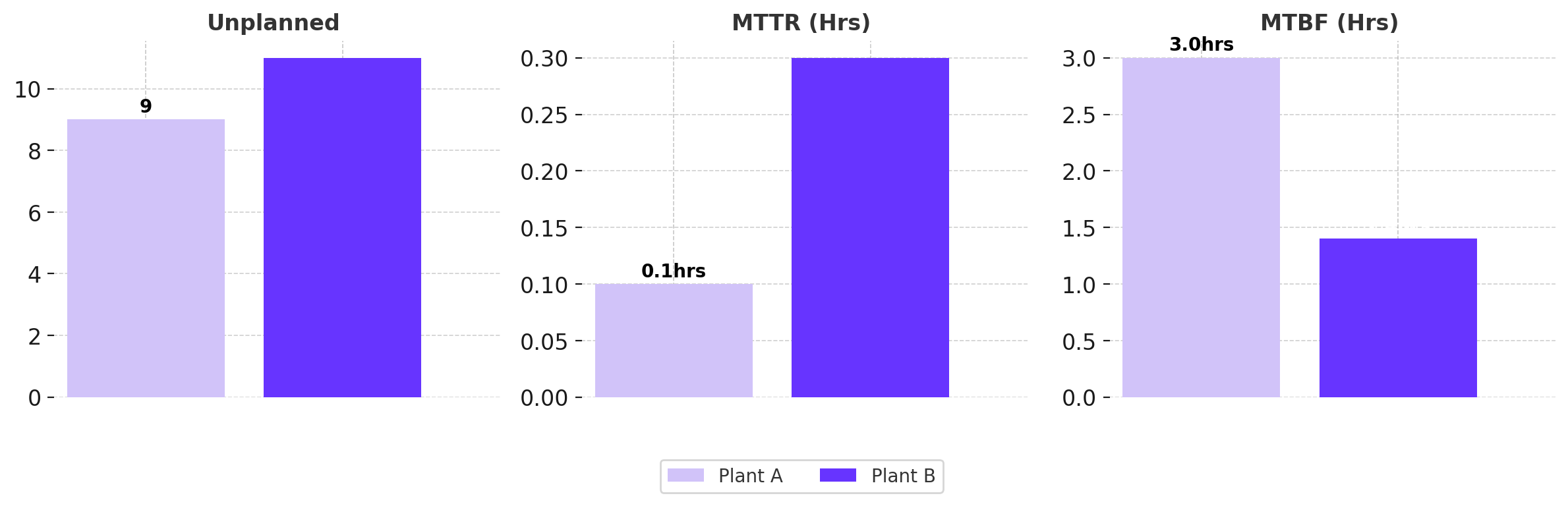
Plant A records fewer breakdowns (unplanned downtime), a faster mean time to repair (MTTR) and a longer mean time between failures (MTBF). It also runs a lower labour variance. The result? Better overall efficiency despite less raw uptime.
What OEE benchmarking shows you in practice
When you look beyond the headline OEE score, benchmarking reveals strengths and weaknesses you can act on.
Finding the extra capacity you didn’t know you had
Plant A operates at less than a third of its total capacity (Load factor is the percentage of that capacity actually being used over a given period). With more shifts, it could more than double output without compromising its current performance levels. Plant B, already near two-thirds capacity, has less room to grow without investing in improvements.
Linking OEE numbers to cost and efficiency
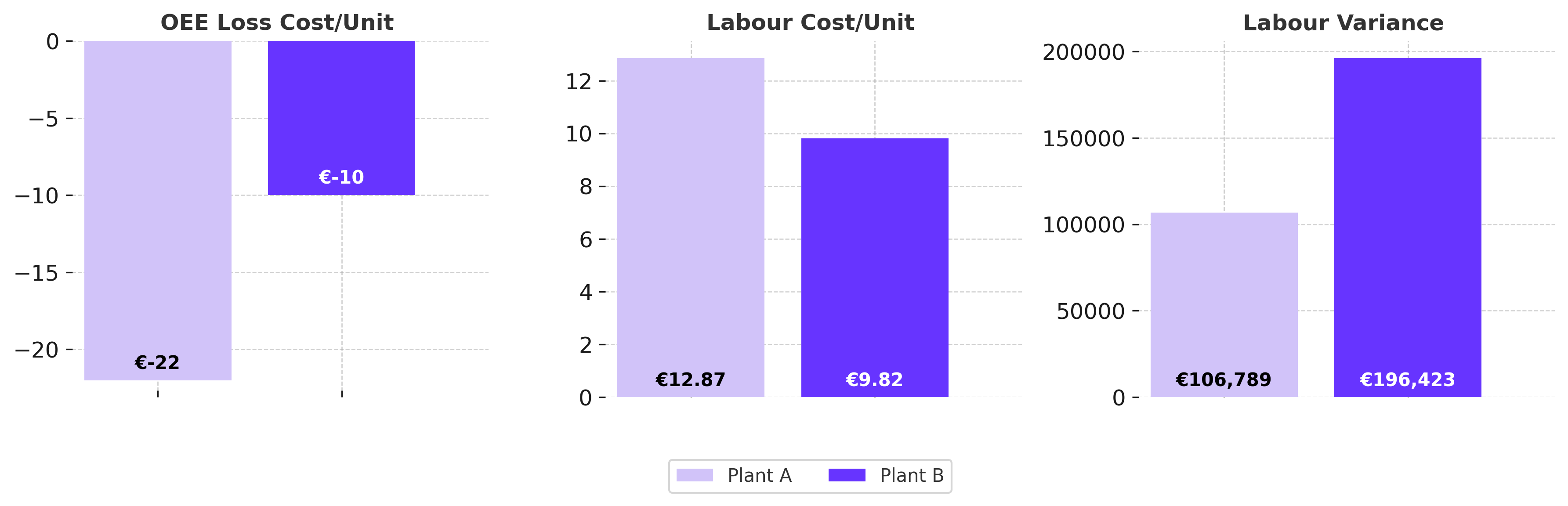
Benchmarking also connects OEE to cost per unit and labour efficiency. Plant A’s cost per unit is higher due to product value and operating costs, but its labour variance is half that of Plant B. These insights can guide everything from pricing decisions to workforce planning.
Turning measurement into better decisions
OEE measurement on its own gives you data. OEE benchmarking turns that data into direction.
Compare across plants, improve within each one
The goal isn’t just to see which site is “best.” It’s to learn from the strengths of each and apply those lessons across the business. Plant A’s quick changeovers and strong quality performance could benefit Plant B. Plant B’s higher uptime could inspire Plant A to explore further availability gains.
Using good data to build a performance culture
Benchmarking works best when it’s part of the culture. Share results openly, explain the story behind the numbers and focus on practical changes that improve the whole operation not just the metric.
When done right, OEE benchmarking gives manufacturers a fair, detailed picture of how plants are performing. It keeps comparisons grounded in real-world context and turns raw numbers into actions that increase output, reduce costs, and improve quality across the enterprise.