


You have made output promises to your customers and your production plans are built around this design. When you consistently fall short of that target, the pressure mounts across the entire business.
Operators face exhausting 14-hour shifts just to catch up on the backlog. Middle managers are squeezed between skyrocketing overtime costs and a burnt-out workforce. In the boardroom, executives watch profit margins shrink and face the imminent threat of losing major customers to faster competitors.
This results in missing OTD (On time delivery) and falling behind in production plans. Depending on your limitations you've got to compromise on the production plans, reset delivery dates and if you are able to add additional resourcing to meet the line which has implications on cost per unit.
Your personnel might feel like they are operating at maximum effort, relying on expensive overtime and weekend shifts just to keep their heads above water. But you know you should be achieving more. You simply lack the correct data to target the right problems, and you do not have the luxury of time to pause and fix processes while constantly playing catch-up.
We at Maintmaster know that modern technology must reduce your workload. Hidden capacity already exists, you just need a connected system to reveal it.
Here is the exact blueprint for how progressive manufacturers use accurate data to drive a culture of continuous improvement, bridging the gap between all manufacturing stakeholders both direct and indirect.
Why you keep missing production targets
When a capacity problem exists, a normal day looks like you are not meeting your output targets within the scheduled production parameters. You know the line is capable of doing it, but for some reason, you are not achieving it. This means spending extra labour and overhead on overtime while departments are focused on reacting. As a plant manager, it is frustrating when it takes 14 hours to produce what you know can be produced in 10 hours.
You only need an actual running time of 60% or 65% during a 12-hour shift to hit your target, but you are stretching that production into costly overtime. It is the same story every day, and personnel are frustrated because they are not getting out the door until 2 hours after their shift ends. Leadership and middle management are continuously told by the groups below them that they are being worked to the bone.
Your departments are all working hard toward the exact same goal, doing their absolute best with the limited data they have. But when output falls short, the frustration builds both within and across teams. Engineering questions planning, and planning questions production. It creates a cycle of friction simply because there is no single version of the truth.
In the morning stand-up meetings or Gemba walks, you know you are potentially going to be put under pressure because you have done something wrong. The day-to-day work is always reactive, always 2 steps behind, and always chasing.
This reactive state creates massive physical inefficiencies on the floor. Without live data, managers do their routine floor walks in physical sequence. You might waste 30 minutes casually checking on lines 1 through 4 because everything looks fine. You get pretty annoyed when you finally arrive at line 5 and realise it has been broken down for 3 hours, knowing you should have skipped the other lines and rushed straight there first.
Why manual tracking and spreadsheets fall short
Before talking to us, somebody will usually come up with an Excel spreadsheet where they log the downtimes. If you have short stops that last 1 or 2 minutes, they are rarely recorded. Spreadsheets miss these cumulative minute-by-minute losses. On a high-speed line running 60 parts per minute, just 1 undocumented minute of downtime every hour during an 8-hour shift means you lose 480 units and have no idea why.
Because the spreadsheet is completed at the end of the shift, it is only reviewed the next day. But hidden capacity is not recovered in tomorrow's review meeting. It is recovered when teams can see a loss building and act before it grows into another hour of missed output. Departments get a lift when they start measuring OEE manually, but they eventually plateau. System adoption drops because manual logging is a pain for operators, and relying on yesterday's data completely stalls the proactive culture change your plant actually needs.
Often, a process engineer or graduate is given the job of building a complex Excel reporting tool for the floor. That approach relies on zero staff turnover and perfect training to work. In reality, with a high volume of agency workforce, the operator filling out the sheet tomorrow may be completely different, guaranteeing the data will be inconsistent or abandoned entirely. This approach seems reasonable at first because it is free, meaning zero cost and nothing ventured.
The numbers will always look semi-good because operators can manipulate them for many reasons. In one example with Volvo trucks being spray-painted, a person went to the site with a stopwatch for 2 hours, and the difference between reality and what the operator logged was a 40% difference in downtime. When your baseline numbers are manually manipulated to this degree, any attempt to uncover hidden capacity is built on pure guesswork.
How you lose capacity during a typical shift
To understand why your factory is losing capacity, look at how a typical shift actually unfolds. Let us look at a plastics manufacturer as an example. An order comes in from a customer for 40,000 plastic bottles, which goes into scheduling and is sent to the tool change group. Once released into production, the operator receives a job spec card detailing line speed and the exact number of good bottles needed. They are given 90 minutes or 2 hours to do a tool change. That looks good on paper, but the operator is already running 2 or 3 other machines. If engineering is doing a tool change inside a blow moulding machine, the operator cannot put moulds in over someone's head and must sit and wait until completion due to health and safety. Before the line even starts, your scheduled production time is already bleeding away.
As the shift progresses, the pressure to make up for that lost time causes communication and process breakdowns. In one scenario, somebody turns a machine down to 90% for a quality issue but never gets back to update the whiteboard. They go to an 8am production meeting and completely forget about the 90% setting when they return. Operations personnel fix problems themselves because they do not want to be waiting on maintenance. Similarly, the relentless pressure to maintain capacity forces engineering to cut corners. If an engineer is working alone at night and needs to access a control panel on a high voltage system, there is a high chance they will do it live. The correct lock-out and tag-out protocol takes much longer, so they bypass it to save time.
By the end of the day, critical information about these capacity-draining delays is completely lost. Line-side handovers fail at 6am and 6pm because personnel are frustrated trying to manually clean up suspect data to accurately reflect the shift. Crucial details about QA sign-offs and material changeovers are missed because exhausted operators just want to go home and see their family. Long-term suggestions for improvement get lost because operators have to fill out a paper file and submit it into an envelope in the shift manager's office like a post box. These suggestions are read at a Monday morning meeting, and an operator can make the same suggestion multiple times without ever hearing back.
Every disconnected step in this manual process guarantees you will repeat the same missing output tomorrow.
The financial impact of lost production time
A manufacturer we worked with used to make top-heavy cocktail shaking bottles that would go down a decline conveyor and fall over. The company had no clue how much this cost in labour time. They hired a temporary workforce on minimum wage to stand on either side of the machine for 12 hours a day on a night shift, paying a 1.5 times bonus rate.
If you make-to-order and need to get products out the same day, you are constantly disappointing people on their on-time deliveries. For example, there is no way a dairy supplier like Müller could skip shipping their orders for milk to a supermarket for the following day. If you are producing strip steel and a customer asks you to produce more, telling them you cannot handle it means they are not going to wait. They will go elsewhere, and soon your lines are not running, and you have to do layoffs because you lost the business.
Owners might see a steady revenue stream and assume everything is fine, completely blind to the fact that excessive overtime and weekend shifts are crushing your profit margins. What the owners do not see is the impact on customers who give you that max capacity feeling today. If you tell them you cannot accommodate their urgent requests or growth, they will not wait. They will find a competitor who has the capacity to handle their new demand, and they will take their existing baseline business with them. When that happens, revenue drops and budgets are slashed. The temporary workforce disappears, and the remaining skeleton crew on the operations side faces double the pressure just to keep the struggling plant alive.
How connected software reveals hidden capacity
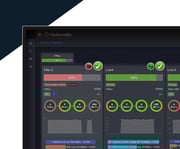
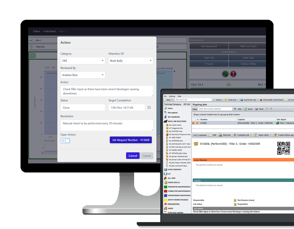
Recovering hidden capacity requires understanding exactly where loss is building, how often it repeats, and what precise action will remove it. Maintmaster OEE gives production teams live visibility of Availability, Performance, and Quality losses as they happen. It includes full analytics, drill-down reports, and Pareto views by site object, line, product, and shift, allowing your teams to interrogate recurring losses in detail, quantify their impact, and support daily continuous improvement reviews.
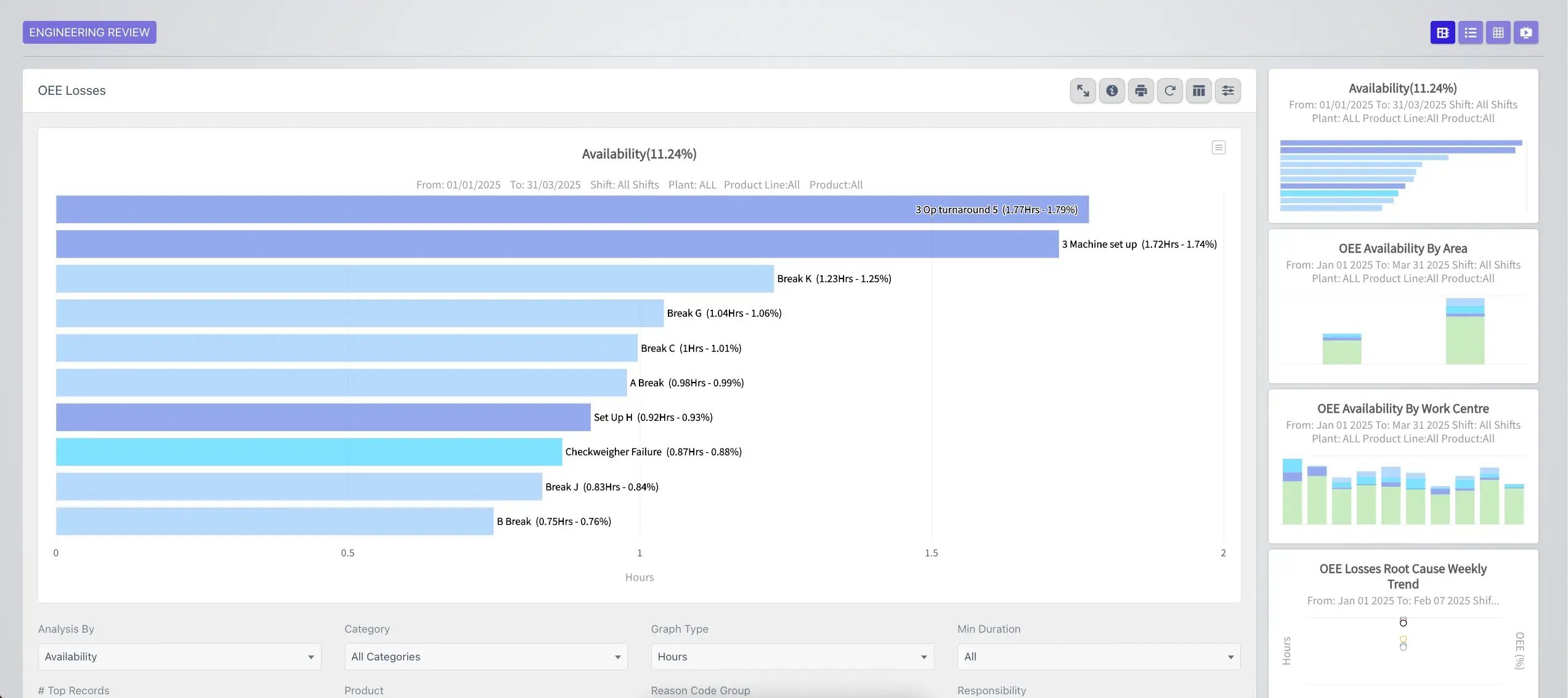
A single downtime cause often ripples across multiple shifts and site objects. Maintmaster OEE brings those cross-line patterns into view. Maintmaster CMMS then connects those losses directly to the asset, work history, spare parts, and maintenance activity behind them.
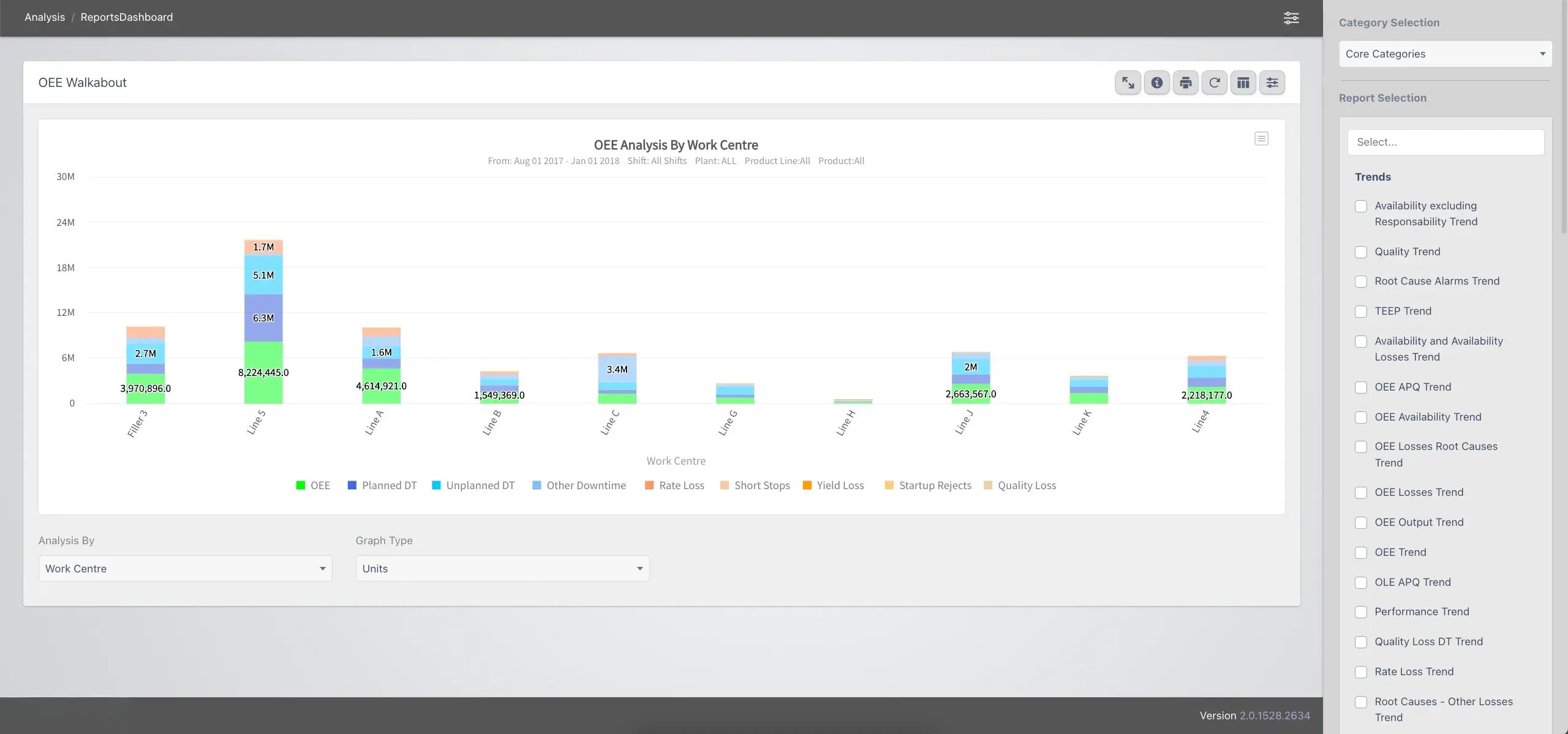
This connected view stops the scenario where operators spend 30 minutes walking past 5 or 6 people to find an engineer while the site object is offline. That 30 minutes happens every week, 52 weeks of the year, and it is a big loss of time.
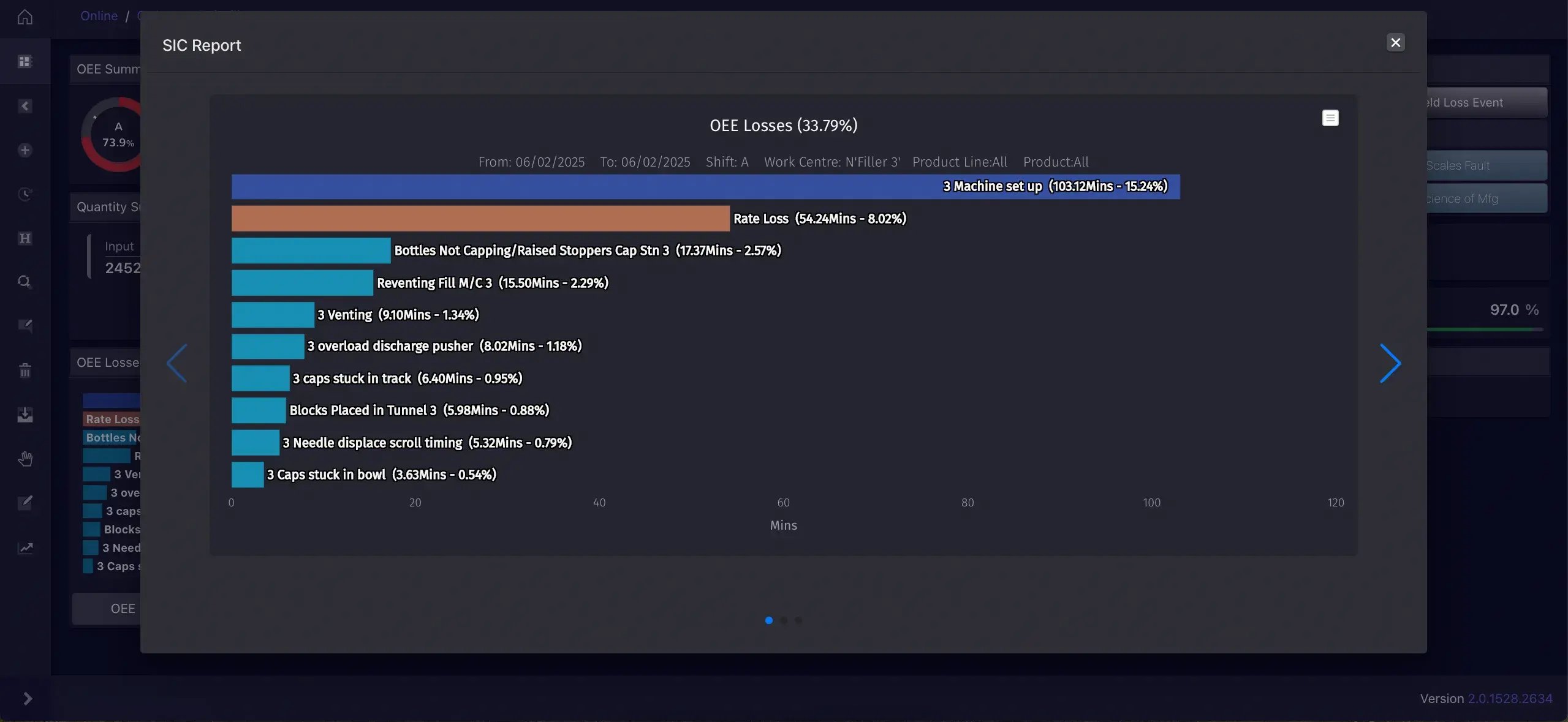
Maintmaster Manufacturing Intelligence (MI) adds another layer of context by turning operator logs, shift notes, and comments into actionable insights. It helps teams understand the operational reasons behind recurring issues and act with more confidence.
In one case at medical device manufacturer CooperVision, MI revealed that 30% of their total downtime was due to time waiting for engineering, simply by pulling together the same comment added by operators across multiple processes.
Maintmaster IoT adds an early warning system to protect your output. If a gearbox fails, your conveyor stops driving, and most businesses do not hold Cat B or Cat C spare parts on a shelf.
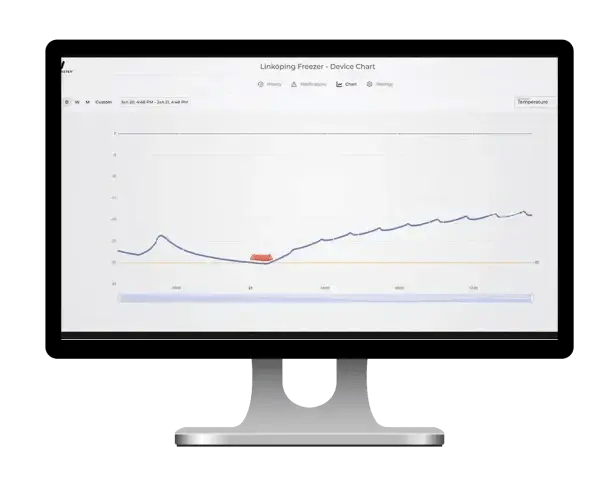
By tracking vibration in real time, the IoT sensor detects the degradation weeks before the gearbox actually fails. This gives you the exact lead time you need to order the Cat C part from Germany and schedule the replacement during preventive maintenance, completely avoiding the catastrophic 2-week capacity loss.
The results of 100% accurate production data
Once the system is in place, any data debate is completely gone because the information is 100% accurate. When the line is down, it truly is down, and when it is running, it truly is running. Customers are surprised the most by how unreliable the original data was and how everybody is now working off the same game sheet.
We very quickly become a priority system on the line that personnel cannot do without. Plant managers say the floor is in control, and operators get very sensitive if there are any outages, which shows how reliant companies are on a system running live. Decision making is the first thing that is impacted because you can see the data. We have 1 customer who simply does not understand why the business avoided doing it sooner.
Revenue growth is a key result because departments have more predictability with insights. Engineering can start to plan preventive maintenance activity based on the increase in capacity, allowing the department to work in harmony with production. Plant managers can finally hit their baseline target of 65% actual running time every day, and tell the boss at HQ that the plant could confidently take on another product.
Why maximum capacity is a dangerous illusion
Running a plant without real-time production and machine health data is like taking the fuel gauge out of a car and driving it to see how long you can go until you need fuel. The IoT sensor brings confidence and security to knowing exactly what is going on. Operating in the dark directly creates the dangerous mindset that your facility has already reached maximum capacity.
Believing you have reached your ceiling kills the appetite to continuously improve and strive for more. Without a unified view of your OEE data, your shop floor operates like full backs and forwards all trying to win the game, but not playing together. Maintmaster OEE aligns the entire facility and tells everyone exactly how to play the issue.
This internal alignment is mandatory because customer expectations are ruthless. If Amazon Prime stopped delivering the next day and a new company called Rainforest Prime sprang up and could deliver the next day, you would switch to the 1 offering next-day delivery. The whole world is changing that view, and you have to be ready to handle that. Once departments experience this level of control, their eyes are opened, and personnel would never go back to pen and paper.
The true cost of doing nothing
By doing nothing, you actively choose to carry the same avoidable losses into tomorrow, next week, and next quarter. When short stops stay hidden, response times stay slow, and maintenance and production work from disconnected information, the business keeps paying twice. First in lost output, and then again in the expensive overtime and reactive effort needed to recover it.
Planned production takes longer than it should. Repeat issues consume engineering time, leaving no room for preventive maintenance. Shift handovers pass on symptoms rather than causes. Managers make labour and scheduling decisions without a clear view of where recoverable capacity is actually lost.
This drives facilities to needlessly request more time, labour, or assets, ignoring the avoidable loss still trapped inside current operations. Inaction locks hidden inefficiency permanently into the way your site runs.
The Maintmaster ecosystem bridges the gap between maintenance and production. By connecting Maintmaster CMMS, Maintmaster OEE, Maintmaster Manufacturing Intelligence (MI), and Maintmaster IoT, you turn scattered shift notes and production data into one unified, 100% accurate picture of your shop floor.
By unlocking your hidden capacity, you generate continuous revenue growth and predictability. We at Maintmaster give you the exact tools you need to make fact-based decisions that instantly protect and grow your bottom line.
Book a demo today to see exactly how Maintmaster reveals your hidden downtime patterns and helps you achieve manufacturing excellence.