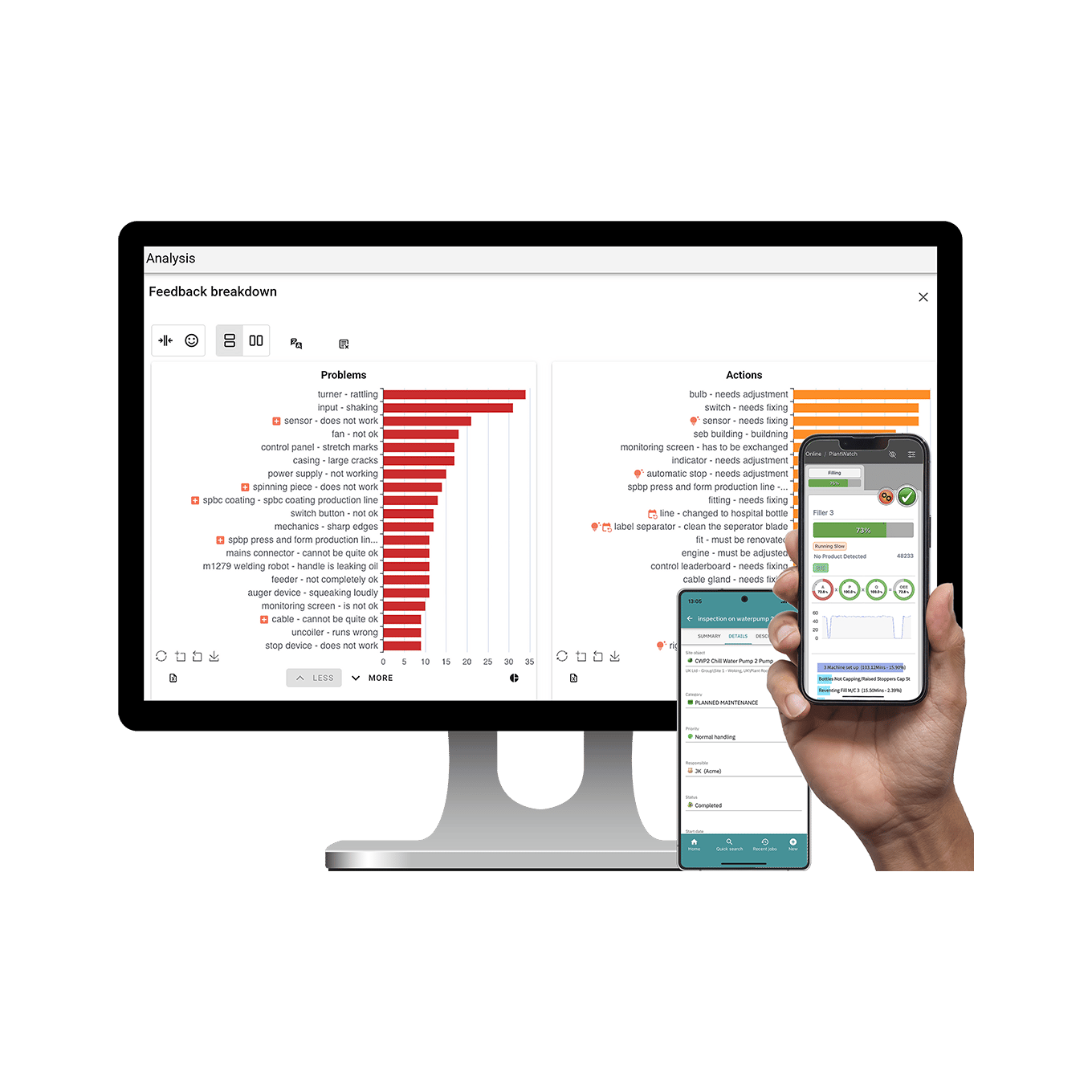
faster to prioritise
Give reports and insights a sharper focus
Maintmaster MI helps teams understand the operational patterns behind recurring losses. By connecting insights from your CMMS, OEE, and other operational data sources, it helps leadership and improvement teams identify where to focus first.

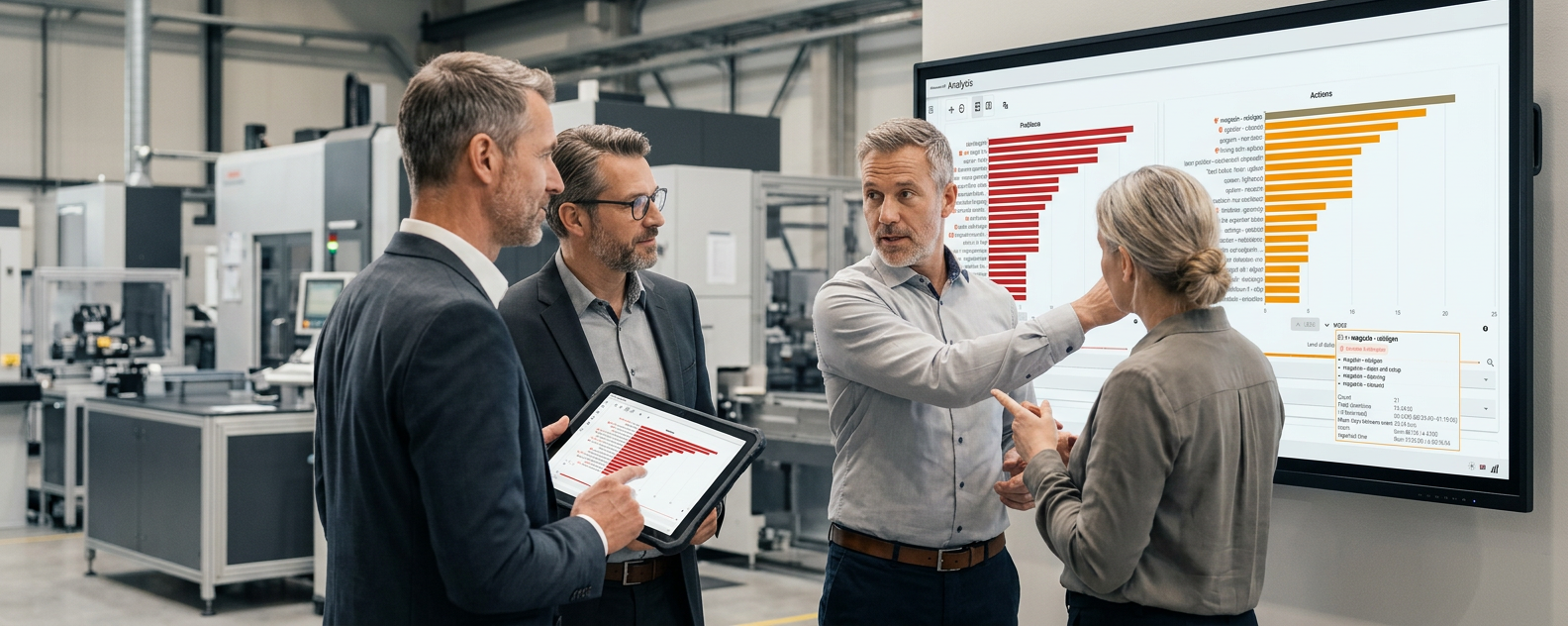
Why teams use Maintmaster MI
Prioritise with more confidence
See which recurring issues, losses, and patterns are likely to have the biggest operational impact.

Bridge the data gap
Unite structured OEE data with unstructured CMMS notes for complete operational context.

Sharper improvement decisions
MI adds context to connected operational data, creating an active decision-support system for senior leaders.

Without clear direction, you drown in data.

Before
When every dashboard demands attention
Executives often drown in data across disconnected CMMS and OEE dashboards, struggling to pinpoint where to direct continuous improvement teams. When data lives in separate silos, you waste time digging for actionable insights, and improvement projects end up being based on whoever shouts loudest.

Action
Find the improvement in the noise
Maintmaster MI sits across connected operational data, interpreting text notes and combining them with sensor signals and downtime logs to help teams identify the loss patterns costing the most.

Result
Strategic alignment. Confident decisions
Leadership teams get clearer support for deciding where to focus resources, based on patterns across connected maintenance and production data. You get more informed strategic direction grounded in a broader operational context.
Powerful tools for executive decision support

Unify your manufacturing data
MI acts as the intelligence layer, combining your Maintmaster CMMS work orders with live OEE performance data and operator notes giving you one unified source of truth.
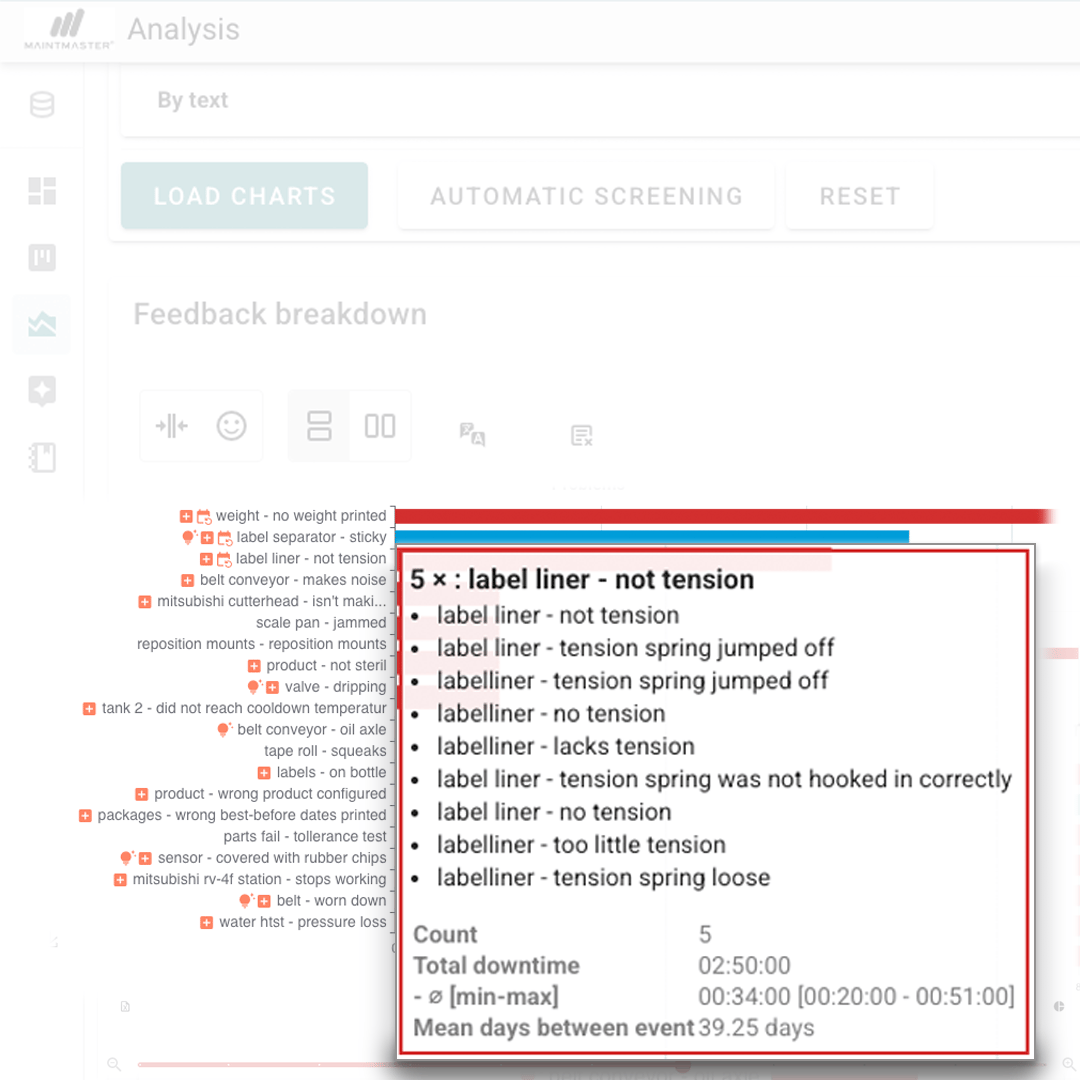
Spot the patterns that matter most
Maintmaster MI cuts through thousands of data points and messy notes to structure and rank the complete story behind your downtimes.
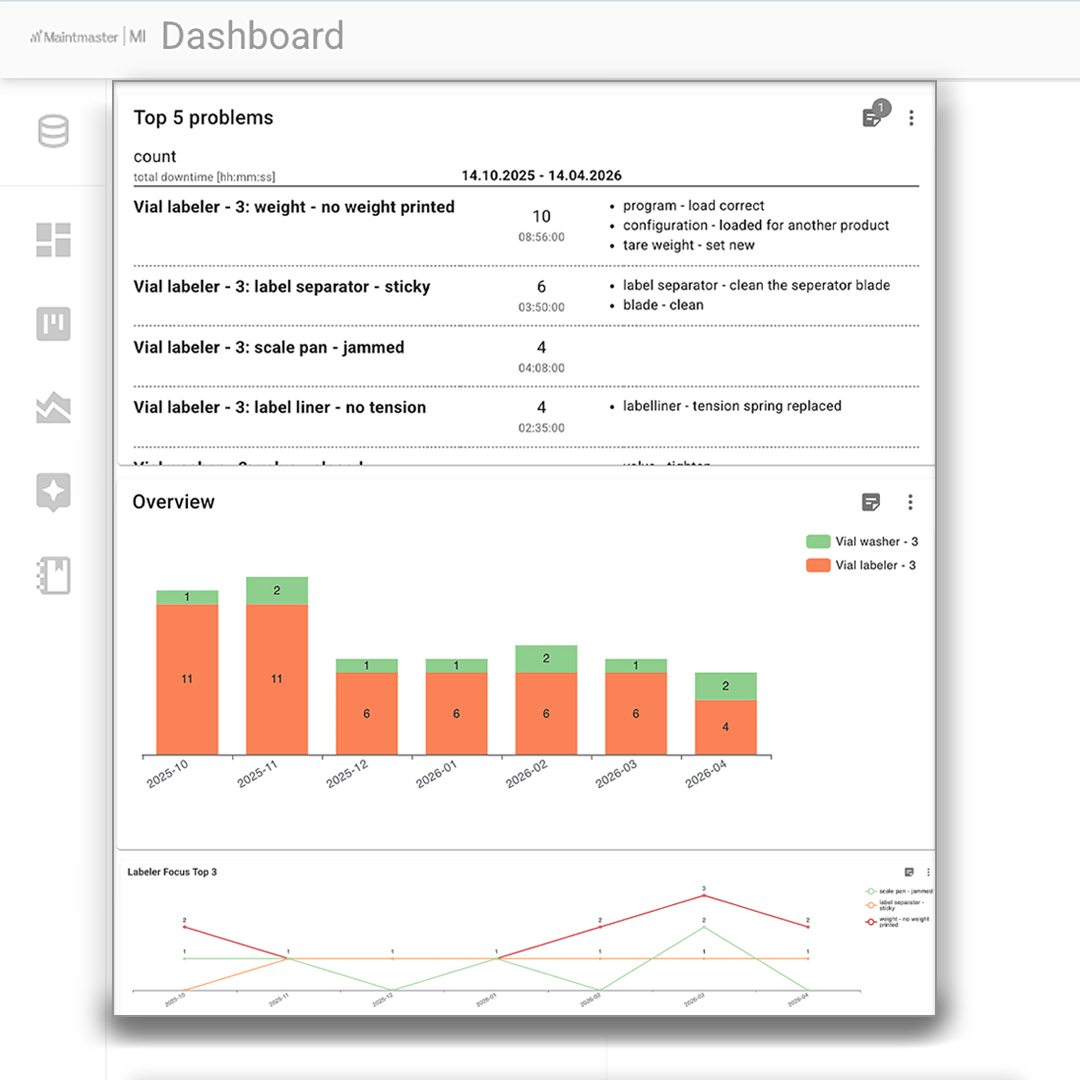
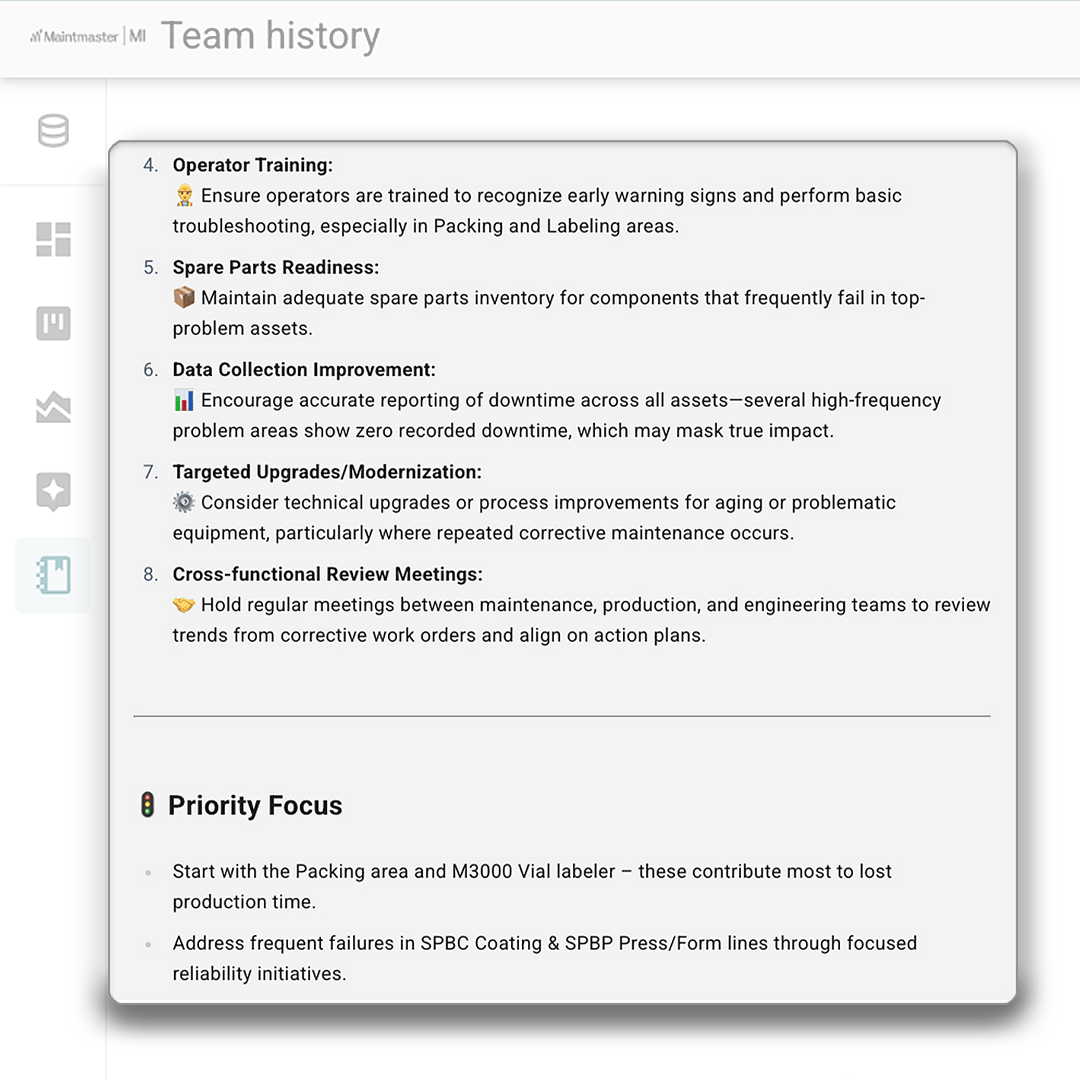
Guide strategic focus
MI presents clear action-ready priorities, helping senior teams tackle the issues that impact the bottom line most with clear suggestions and recommendations for improvement.
Proven results. Turning data into approved budgets.
saved per review
fewer repeat failures


Before and after
Maintmaster MI

The old way
Visibility is clear. Context takes longer.
- The wider operational context is still spread across notes, logs, and systems
- Teams spend time piecing together what is driving recurring issues
- Moving from visible loss to confident action can still take too long

The new way
An added decision-support layer
- Context added from notes, logs, and operational signals
- Recurring loss patterns understood more clearly
- Better-informed decisions on where to focus next
Your data already knows where to focus.
MI helps you see it.
Stop piecing together your insights! Maintmaster MI connects your CMMS and OEE data with operator logs and notes to surface the patterns that deserve your team's attention first.

See other MI use cases
Institutional knowledge capture
Never lose expert knowledge again. Turn decades of shop-floor experience into a searchable, plant-wide asset.

Data-driven investments
Build bulletproof business cases. Back budget requests with structured downtime data instead of fragmented evidence.

Preventive Maintenance optimisation
Align your maintenance with reality. Stop over-maintaining healthy machines and missing the ones about to fail.
Frequently asked questions
- What makes Maintmaster MI different from standard dashboards?
- Maintmaster MI tells you why downtime keeps happening. By combining structured OEE data with unstructured CMMS notes and operator logs, it surfaces the patterns behind recurring losses - helping you find better solutions that last.
- Who is the decision support layer designed for?
- Primarily plant managers, operations directors, and CI leads who need to direct resources and justify improvement investments. It gives senior teams a fuller picture allowing them to see where to focus next for the best outcome.
- How does MI handle messy or inconsistent operator notes?
- That's exactly what it's built for. MI is trained to interpret natural manufacturing shorthand (abbreviations, typos, shift-specific language) and group similar entries into coherent patterns across lines, shifts, and sites.
- How quickly can leadership teams act on what MI surfaces?
- MI presents priorities in plain language, not raw data dumps. Because the context is already interpreted — patterns ranked, losses quantified, operational signals connected — senior teams can move from insight to decision in the same meeting, rather than commissioning another round of analysis first.
- What happens when maintenance and production data finally speak the same language?
- Improvement projects stop being driven by whoever has the loudest voice in the room. When MI unifies your CMMS and OEE data into a single operational picture, teams across maintenance, production, and leadership are working from the same priorities — which means less internal debate and faster alignment on where to act.