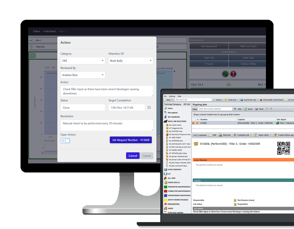




Trying to turn the gear from immediate fixes to proactive maintenance? It’s hard if your managers don't see what all the maintenance responsibilities involve. And it’s even harder if that silent expertise is soon to retire.
I've spent my career in maintenance, and the last 11 years meeting manufacturing customers across Europe. The struggles are similar from plant to plant. The maintenance team is called on for immediate fixes, and decision-makers in the corner room might not even understand what preventive or proactive maintenance looks like on a task level.
The production seems reliable enough, but it might be thanks to a senior maintenance technician who knows the machines like the back of their hand. It all won’t collapse the day they retire, but soon after that things tend to pile up.
70% or 20%: One number reveals how reliable your maintenance process is
When I get to know a new plant, I ask one thing first: how much of your total maintenance time goes to immediate corrective maintenance?
Most managers answer at least 60%. Often 70%. Unfortunately, sometimes over 75%.
That number tells me a lot. If you cannot plan what you are supposed to do the next day, you are firefighting, and that is not the optimal way to minimise downtime and keep the lines rolling.
A realistic goal of immediate corrective maintenance work is around 20%, which leaves 80% for more structured work. If you’re not sure, start by measuring where you’re at.
If you’re far from the goal, one reason might be that preventive maintenance tasks remain an invisible concept altogether, when company C-level makes their resourcing decisions. Documenting the optimal maintenance cycle is the first step to gain the respect and time needed.
If you don’t have a CMMS in place, but your machines seem well-greased and the maintenance cycle works like a charm, another alarm should be ringing. That is called “the silent knowledge living in your senior expert’s head”.
The quiet years are the dangerous ones, if you want to build a resilient maintenance cycle
In the past, every maintenance cycle detail depended on someone remembering what to do and when. In many plants, that is still the reality: one experienced maintenance manager or technician is informally holding machine reliability together.
They know the gearbox that needs attention once a year. They know which pump lasts about 7 years. They know why a routine exists, because they were there when it was created. It is written down in nobody’s system but their own memory.
Then they retire. And here is the trap: nothing happens right away.
Proactive maintenance requires proactive documentation
For the first two or even six years, you don’t see anything, because maintenance cycles are slow. Tasks that repeat every 6 months are easy to remember, while tasks on a 5-year or 7-year cycle do not.
Meanwhile you may have changed 3 or 4 more people. And then suddenly everything starts to break, because nobody has control of what you are supposed to do and how often.
By the time the damage shows, the person with the answers has been gone for years.
I have seen new maintenance managers calling a retired colleague every other day just to get through the week.
Retirement is just the clearest version of this. The same risk appears in any team transition: a promotion, a transfer, someone leaving for another company. The knowledge does not ask permission before it walks out the door.
There is only one protection: write it down somewhere, and a maintenance system is the best place. Every recurring task should state what you are supposed to do and how often, so machine reliability survives the next handover, and the one after that.

Better visibility gets you through a team transition
Every maintenance team I have met deserved more resources. Most never made the case, because the case only ever existed in someone’s head, and it left the building the day they did.
Maintenance rarely loses the argument for resources because the work is poor. It loses if the work stays invisible, and invisible work is also the first thing to fail in a team transition.
Register what you are supposed to do, not only what you have done, and two things happen at once:
- You can finally show management where the hours go, which is what earns a maintenance team respect and resources.
- And the next person to sit in your chair inherits a plan instead of a blank page.
Documentation helps prioritise real maintenance tasks
Too busy to plan and document? Part of it is that high-skilled maintenance experts absorb work that is not maintenance at all: from light bulb changing to moving furniture. Everyone tells me they want to move towards preventive and condition-based maintenance, but the maintenance organisation chart rarely reflects it.
And when a plant starts measuring OEE, this might get even worse before it gets better. Suddenly all kinds of losses become visible, and the expectation is that maintenance should fix them all. But a technical issue does not automatically become a maintenance task. Many OEE losses have their root causes in operating methods, planning, training or quality. Be strict about the tasks maintenance takes on, and report what you actually do. Make it visible through using CMMS along with OEE.
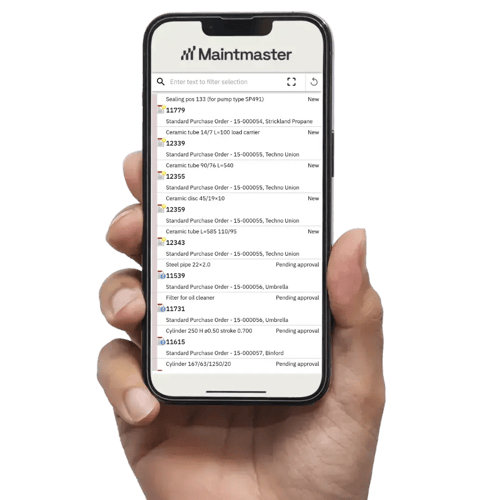
6 steps to take before team transitions
- Measure plannable versus unplannable work. It shows where you stand, and it becomes your evidence when you ask for more resources.
- Register what you are supposed to do, not only what you have done. Book one hour a week for documentation. That is enough to begin.
- Put the “how” into the work order. A short SOP (Standard Operating Procedure) helps to keep production reliable no matter who performs the task.
- Make root cause analysis routine. Start with one problem every week and make sure that problem will not occur again. It can be simple, and a good system helps: every notable stop can automatically create a follow-up job that says “do a root cause analysis on this”. Very often the fix is easy: “grease this part every second week.” Then you create a recurring work order, and it is handled from now on, whoever is on shift.
- Turn breakdowns into future plans. A part that fails after 7 years of service should leave a work order behind: replace the spare part in 5 years. The system will remind you 30 days ahead and you don’t need to keep the part in stock. The breakdown happened once. It never has to surprise you again.
- Show the long-term value of proactive maintenance. Here is the uncomfortable truth about preventive work: when it succeeds, nothing happens. The problem you prevented today might only have occurred in 7 years, so management sees the cost and never the result. There is politics in everything, even maintenance. You need visible wins to prove you are doing a good job, and documented history to show what did not break, and why.
Common questions and answers from manufacturers
Q: How do I know if our maintenance cycle depends on one person's knowledge?
A: Ask what happens to a recurring task if that person is out for a month. If nobody else knows it needs doing, or when, or why, it is not written down anywhere but their head. The same test works for any team transition, not only retirement: if the plan cannot survive someone changing roles, it was never really a plan.
Q: Shouldn’t the maintenance team be able to handle any technical problem we have?
A: No. Rebuilding a machine to increase its output should be budgeted like an investment, not folded into your maintenance hours, even when a maintenance engineer carries it out. The same goes for tasks that have nothing to do with machines at all. If a task does not need a maintenance engineer's skill, insource or outsource it, and let the team spend its hours on real maintenance work.
Q: A new maintenance manager inherits a plant with no documentation. Where do they start?
A: It depends on what your team already knows. If the supplier’s documentation still exists, start there. If the machine is old and nothing is left, the manager needs to learn it first, often from whoever is still around. Either way, the rule is the same: start registering what you are supposed to do, not only what you have done.
Q: Preventive maintenance can take years to pay off. How do you keep management convinced?
A: You need visible wins alongside the long-term work. When prevention succeeds, nothing happens, and management sees the cost but never the result. Fix a few quick, visible problems early, and keep a documented history of what you prevented and why, so you have proof when someone questions the budget years later.